Custom Website vs. Template: Which Is Right for Your Business?
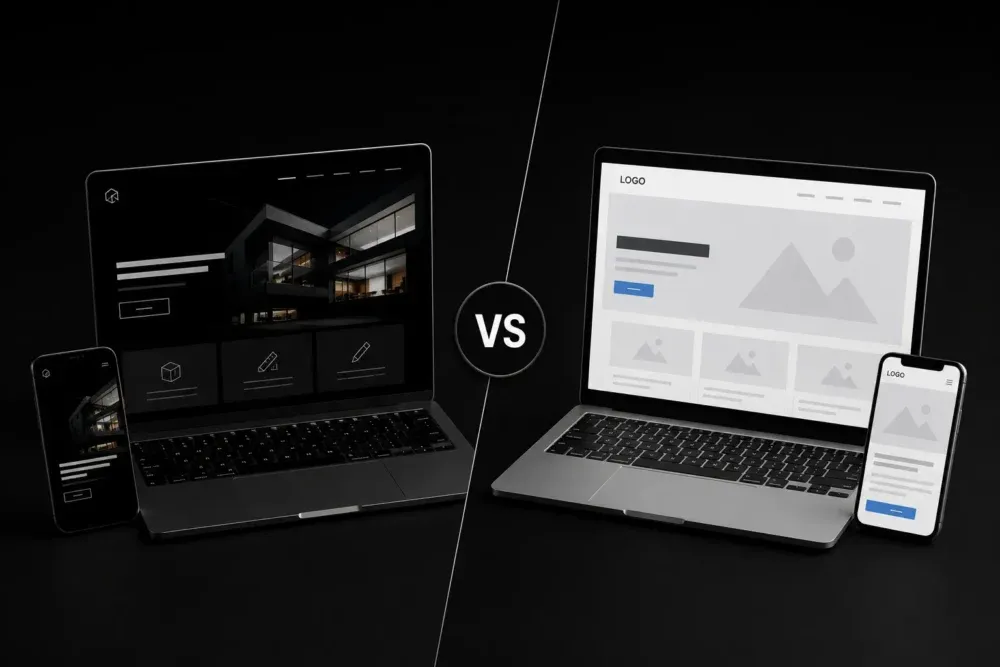
You’ve decided to hire a designer instead of building the site yourself. The next question is what they build it with: a premium template you customize, or a layout designed from scratch around your business. Both produce a working website. They differ in how much the site ends up looking, working, and converting like every other business using the same theme.
The Quick Comparison
| Factor | Template | Custom design |
|---|---|---|
| Cost | $500–$2,000 | $2,000–$10,000+ |
| Timeline | 1–2 weeks | 3–8 weeks |
| Layout | Pre-built, limited rearranging | Built around your content and goals |
| Uniqueness | Shared with other sites using the same theme | Built specifically for your business |
| Scalability | Limited past what the theme supports | Built to grow with new pages and features |
| Best for | Simple sites on a moderate budget | Businesses that need the site to work hard for them |
What a Template Website Gets You
A premium template is a professionally designed layout you license and fill with your own content. Compared to a DIY builder, it looks more polished out of the box. Compared to a custom build, you’re still working inside someone else’s structure: fixed sections, preset spacing, and a limited number of ways to rearrange the page.
For a business with straightforward needs, a handful of standard pages and no unusual functionality, a well-chosen template can hold up fine. The risk shows up when your business doesn’t fit the template’s assumptions, and you end up bending your content around a layout that wasn’t built for it.
What a Custom Website Gets You
A custom build starts with your business: your customers, your services, and what you want a visitor to do on each page. The designer builds the structure around that, instead of fitting your content into a pre-made shape.
That process costs more and takes longer, and it produces a site that’s harder to mistake for a competitor’s. For a full breakdown of where that cost comes from at each level, from freelancer to studio, see this guide to small business website cost.
Where Templates Fall Short
- Rigid structure. Adding a feature the theme wasn’t built for often means fighting the template instead of extending it cleanly.
- Shared design. Popular themes get used by thousands of sites, including competitors in your own market.
- Growth ceiling. A template that fit a five-page site can struggle once you add e-commerce, booking, or a resource library.
Where Custom Design Earns Its Cost
- Structure that matches your business. Pages get organized around what a customer needs to do, not around what a theme allows.
- Room to grow. New pages and features extend the existing design instead of breaking it.
- Distinct presence. Nothing about the site reads as a stock layout with your logo swapped in.
How to Decide
A template makes sense for a straightforward business on a moderate budget that needs to launch without much delay. Custom design makes sense once the site needs to carry real weight: lead generation, e-commerce, or a brand that depends on standing apart from competitors using the same off-the-shelf themes.
If you’re still weighing this against building the site yourself, this comparison of DIY builders and hiring a designer covers that earlier fork in the decision.
Frequently Asked Questions
Is a template website good enough for a small business?
For a simple site with standard pages and no unusual functionality, a well-chosen template can work well. Once the site needs custom structure, e-commerce, or has to stand apart in a competitive market, custom design tends to perform better.
How much more does a custom website cost than a template?
Templates typically run $500–$2,000 with a designer’s setup fee included. Custom builds run $2,000–$10,000+, depending on scope and features.
Can a template website be converted to custom later?
Not directly. Moving off a template usually means a rebuild, since custom design starts from the content and goals rather than an existing layout. Many businesses treat a template as a starting point and plan a custom rebuild once they’ve grown.
Will a custom website take much longer to launch?
Yes, typically three to eight weeks against one to two weeks for a template. The extra time goes into planning the structure, writing copy that fits it, and building features specific to your business.
Choosing What Fits Your Business Now
Neither option is automatically the right one. A template gets a straightforward business online quickly, and custom design builds a site around exactly what your business needs to do. Match the choice to your stage and your budget, not to which option sounds more impressive.
If you want an honest read on which one fits your business, take a look at my web design services, browse recent website projects, or check the FAQ page for answers to common questions before you reach out through the contact page.
Categories:
Last update: