How Many Pages Does a Small Business Site Need?
You start planning your site and the page count balloons fast: Home, About, Services, three sub-service pages, Team, Testimonials, Blog, FAQ, Contact. Nine pages before you’ve written a word. The right number has less to do with what feels thorough and more to do with what a visitor needs to find before they call, book, or buy.
The Baseline: Five Pages Covers Most Small Businesses
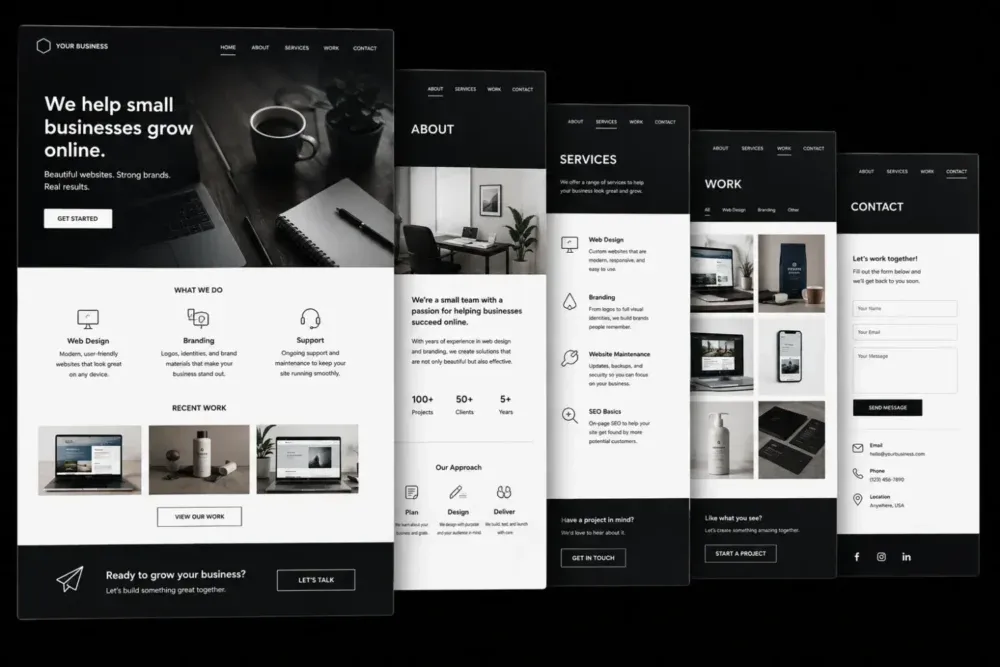
| Page | Job |
|---|---|
| Home | State what you do and who you serve, point visitors to the next step |
| About | Build trust with your story, team, or credentials |
| Services | Explain what you offer and what it solves |
| Work or testimonials | Show proof: past projects, reviews, results |
| Contact | Make it easy to reach you or take the next step |
Five focused pages that each do one job well outperform twelve thin pages that repeat the same information in different words. Page count on its own isn’t a goal. Clarity is.
When You Need More Than Five
- You offer distinct services that different customers search for separately. A separate page per service helps both visitors and search engines match the right page to the right search.
- You sell products. A store needs product and category pages beyond the standard five, a different structure than a service business needs.
- You publish content regularly. A blog needs its own section, which is why most of the posts on this site live under one structure feeding into everything else.
- You serve multiple locations. Each location often needs its own page for local search, rather than one generic contact page covering every area.
How Page Count Affects Cost and Timeline
Every page adds planning, design, and content time to a build. This breakdown of small business website cost shows how price scales with scope, and page count is one of the largest factors in that scope. A five-page site and a fifteen-page site aren’t the same project, even on the same platform.
Pages That Sound Necessary but Often Aren’t
- Separate pages for every tiny service variation. Group related offerings on one page unless each one needs its own search visibility.
- A “Coming Soon” page for a feature that isn’t built yet. An empty placeholder page does nothing for a visitor and nothing for search rankings.
- A generic “Resources” page with three links on it. If a section can’t support real content, fold it into a page that can.
How This Fits Into Planning Your Site
Page count gets decided early, during the sitemap step of a build. This walkthrough of the website design process covers where that planning happens and how it shapes everything after it. It’s also a factor in deciding between a template and a custom build: this comparison of custom websites and templates covers how page count and structure interact with that choice.
Frequently Asked Questions
Is five pages enough for a small business website?
For most service businesses, yes. Home, About, Services, proof (work or testimonials), and Contact cover what a visitor needs to make a decision. Add pages only when a distinct need arises, not for the sake of a longer navigation menu.
Does having more pages help SEO?
More pages help when each one targets a distinct topic or service someone searches for separately. Thin pages that repeat the same content in different words tend to hurt rankings more than help them.
Should each service get its own page?
If your services are distinct enough that customers search for them separately, yes. If they’re variations on the same offering, one well-written page usually serves visitors and search engines better than three thin ones.
How do I know if I need an ecommerce structure instead?
If you’re selling products directly on the site rather than describing services, you need product and category pages built for that purpose, a different structure than a standard brochure site.
Building the Right Structure for Your Business
The right page count comes from what your visitors need to do, not from a template you saw on another site. Start with the five pages most businesses need, then add only what a real gap in the customer journey requires.
If you want help mapping out the right structure for your business, take a look at my web design services, or get in touch and we’ll figure out the right page count together.
Categories:
Last update: